VORT Manoeuvre Guide
Reverse Parallel Park in South Australia
Reverse parallel parking tests observation, judgement and low-speed vehicle control. The goal is to leave and enter a confined parking bay safely, keep checking around the vehicle and finish parallel to the kerb.
This guide supports lessons and VORT preparation. Follow current South Australian road rules and the examiner’s directions.
What the manoeuvre assesses
Observation
Check mirrors, blind spots and the area behind the vehicle before moving. Continue scanning while reversing.
Control
Use very low speed, controlled braking and accurate steering without touching the kerb, poles or another vehicle.
Final position
Finish parallel to the kerb, with the wheels straight and the vehicle central and safe inside the bay.
Key reminder: reference points can help, but they never replace observation, judgement or low-speed control.
Leaving the parking bay
- Prepare the vehicle and check the centre and right mirrors.
- Signal right for at least five seconds before moving away from the kerb.
- Complete a final right blind-spot check and give way to all approaching road users.
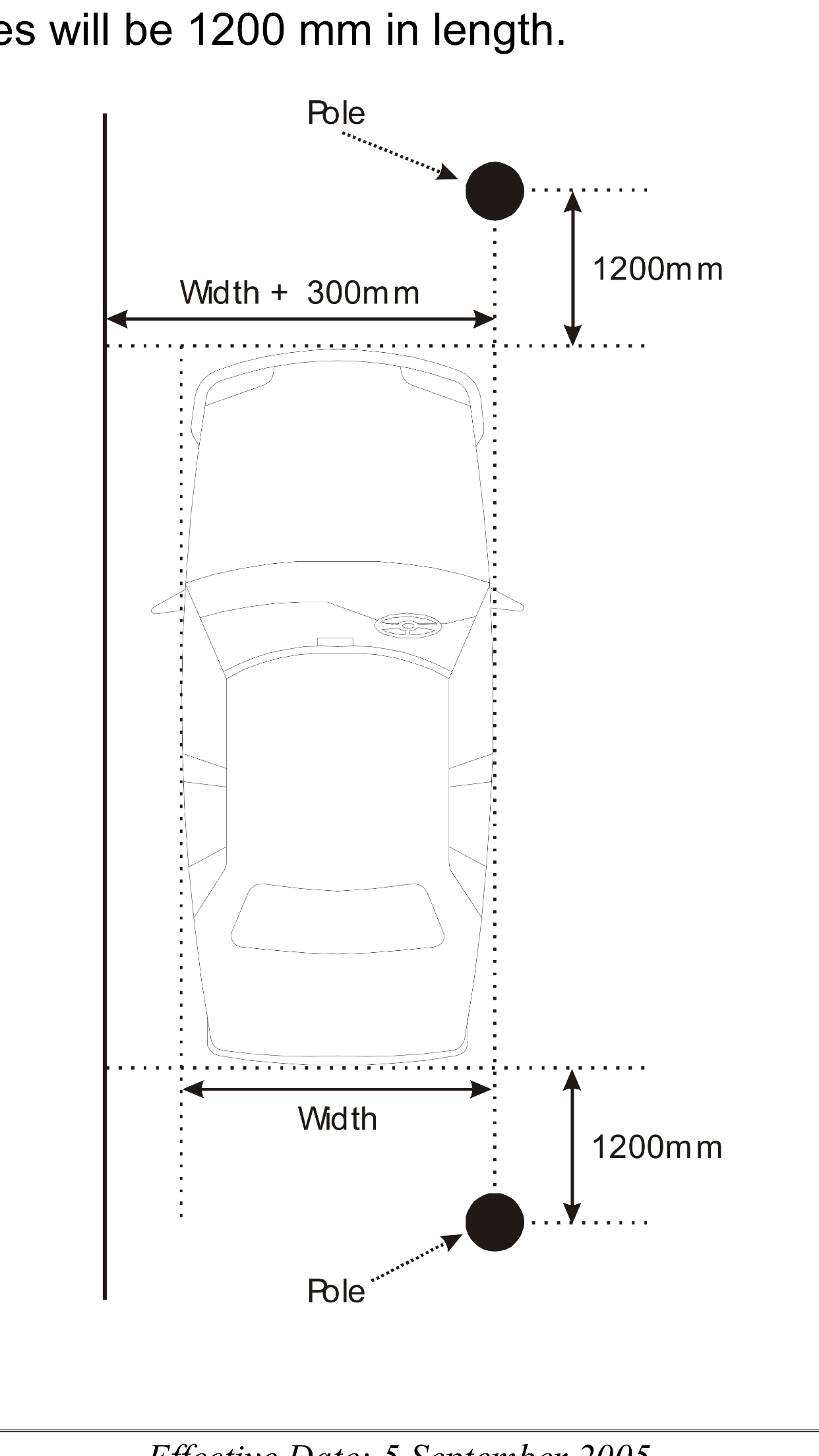
- Move out slowly without touching the poles or kerb.
- Stop parallel to the kerb when the rear of the vehicle is just beyond the front marker.
Reversing into the bay
- Select reverse and check right, left and directly behind over your shoulders.
- Reverse slowly towards the bay while continuing to scan around the vehicle.
- Before steering into the space, check all around again.
- Enter the bay at low speed and monitor the kerb, poles and vehicle position.
- Straighten the wheels and make only controlled adjustments.
- Finish parallel to the kerb, central in the bay and within the required kerb distance.
Instructor tip: go slower than you think you need to. Low speed gives you time to observe, steer and stop before a small error becomes a major one.
Observation pattern
| Stage | What to check | Why it matters |
|---|---|---|
| Before leaving the bay | Centre mirror, right mirror and right blind spot | Confirms it is safe to move away from the kerb |
| Before reversing | Right, left and directly behind | Checks for vehicles, cyclists, pedestrians and driveway traffic |
| Before steering into the bay | All around the vehicle | Confirms nobody has entered the reversing path |
| During reversing | Behind, both sides, mirrors and blind areas | Conditions can change while the vehicle is moving |
| Before final adjustment | Kerb, poles, road users and final position | Prevents contact and unsafe positioning |
Common mistakes
- Starting without the full mirror, signal and blind-spot sequence.
- Looking only at mirrors or the reverse camera.
- Reversing too quickly to make safe corrections.
- Touching the kerb, poles or another vehicle.
- Finishing too far from the kerb or off-centre in the bay.
- Using too many directional changes after entering the bay.
- Forgetting to give way when leaving the parking position.